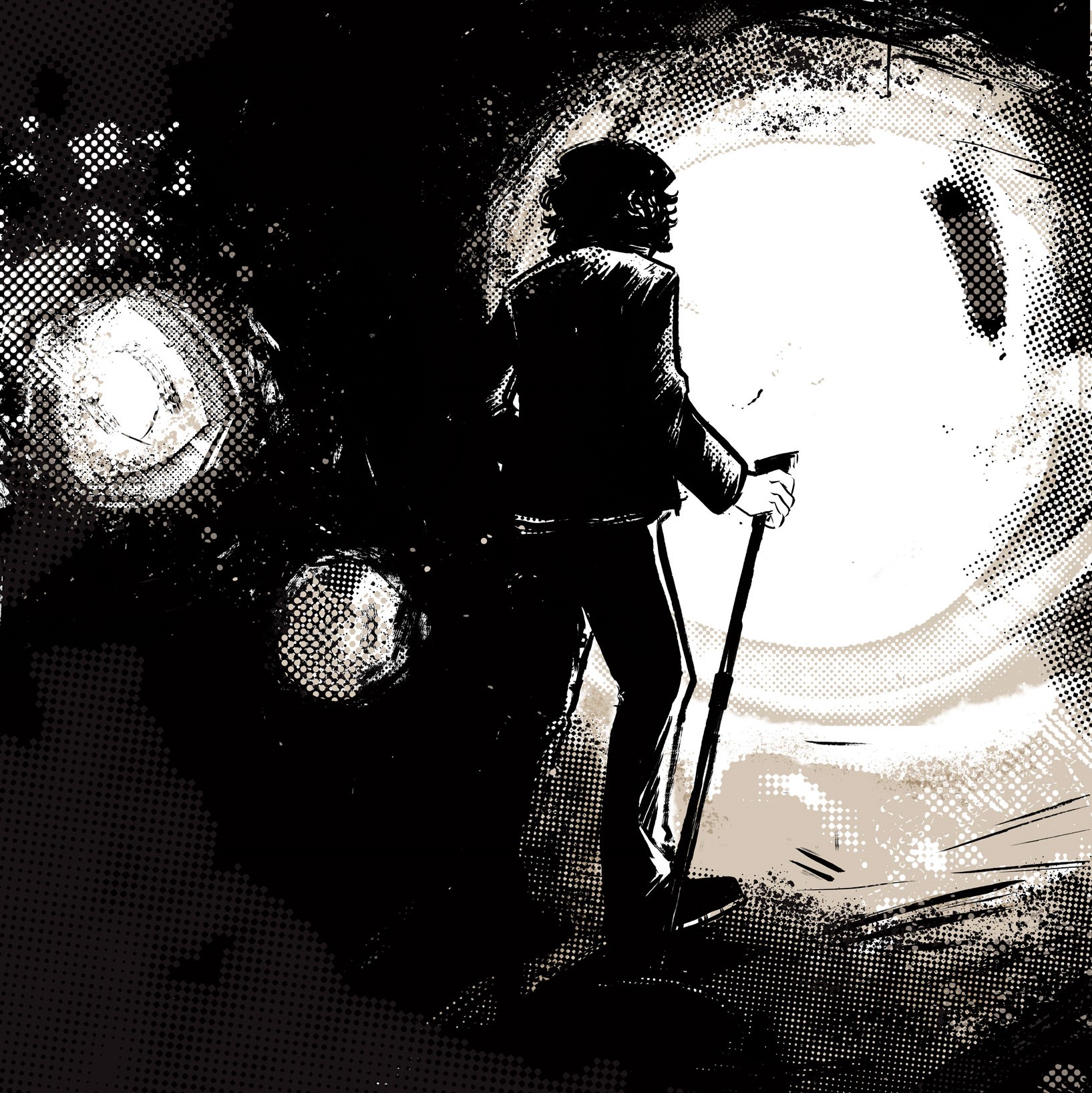
This interview transcript is a deep dive into the creation of Last Song, a sprawling rockstar story that took 20 years to tell.
Thanks to Duna Haller of Comic Watch for the opportunity.
COMIC WATCH: We’re talking with Holly Interlandi about Last Song.
Last Song is a black and white comic series about a band called Ecstasy. The book is about a lot of things, but as a trigger warning, it deals with suicide in its main theme. It also deals with other mental health issues, like addiction.
Nicky is the main character, along with his best friend Drey, and we’ll talk about why these two are central to the book. The book explores the childhood of Nicky, and his father committing suicide—how that affects him, and how it plays into the music of the band. How Ecstasy is formed, and why.
Holly, I know you started to write this when you were 19, so I imagine it’s a very important idea for you!
HOLLY INTERLANDI: Yeah. That was twenty years ago, for those of you who don’t know. [laughs]
CW: How different is the comic from the idea you had when you were 19? What inspired that idea, and is that inspiration similar to what inspires you now?
HI: Obviously, when I wrote it, I was a young thing. Very passionate and enthusiastic about rock and roll, and big epic stories of rock bands. I would live vicariously through them. I could never actually play instruments. I tried, but I was not good at it, and I didn’t have the discipline. So I was like, all right, I’ll just write about music instead.
I actually had a dream, when I was 19, of one of my favorite musicians watching old concert footage of himself, which was the kind of thing that I would do in my college dorm room. In the dream, after he finished watching all the footage, he got really angry and destroyed all of his memorabilia—tapes, CDs, posters, everything.
I woke up and I was like wow… I’ll have to write about that. But when I tried, I realized, what power is there in memorabilia about former rock and roll glory without the story of former glory?
So, I set to write a novel. I never thought I would write novels; I was always a short story writer.
The suicide and the addiction and all that was also inspired by outside elements. Later I’ll tell you about the exact bands and aesthetics I was going for. But when I first wrote it, I had not had any personal experience with those things. I got inspiration from the larger-than-life bands I was following.
Since then, I have had some personal experience. My sister committed suicide not long after I finished the book. It slowly became more about those issues and less about larger-than-life rockstars.
CW: I want to ask you about your inspirations—the bands. The music that appears in the comic, I don’t know if you tried to make any of those songs. You did say you weren’t a musician, so I imagine you didn’t make songs.
HI: I’ve asked other people who are musicians to help me out with that, but it’s kind of a long story. Everything involving this book is a long story because it’s 20 years old. [laughs]
To answer your first question, there are two bands I was really into when I first wrote it. First, X Japan, a Japanese metal band that are very larger than life and glammy. A lot of the story arc and emotion came from them.
HI: The other band was the Manic Street Preachers, who are a Welsh rock band. The aesthetic of Ecstasy is sort of based on their early days. Richey [Edwards] and Nicky [Wire] would pile on gobs of eyeliner, and they’d dress in crazy leopard print. Oh, and you might catch that the main character in Last Song is named after Nicky. [laughs]
HI: Those were the bands I listened to. BUT, when I hear Ecstasy in my head, I don’t hear either of those bands.
I actually discovered a band that, to me, sound exactly like Ecstasy. Which I guess is the highest compliment I can give. That I made up the perfect band in my head and can “hear” them when I listen. It’s a British band called InMe. The singer’s name is Dave, and he’s so cool. I actually talked to him for a bit. I thought I might get him to write some music, and he sent me some demos once, but nothing ever came of it.
Still, every time they put an album out, I’m like YES, this is the Ecstasy sound! So if you want to hear what Ecstasy sound like in my head, check out InMe’s latest album, Jumpstart Hope. The first track, “Blood Orange Lake”—that’s it, right there. They’re just so good.
CW: Each issue of the comic also has a “mix tape,” so you can listen to what the issue might sound like.
HI: I tried to put songs on there that both sound right and fit into the narrative. And Sally [Cantirino, artist for Issues 1-3] did one too, for Issue 3, and hers was so different from mine!
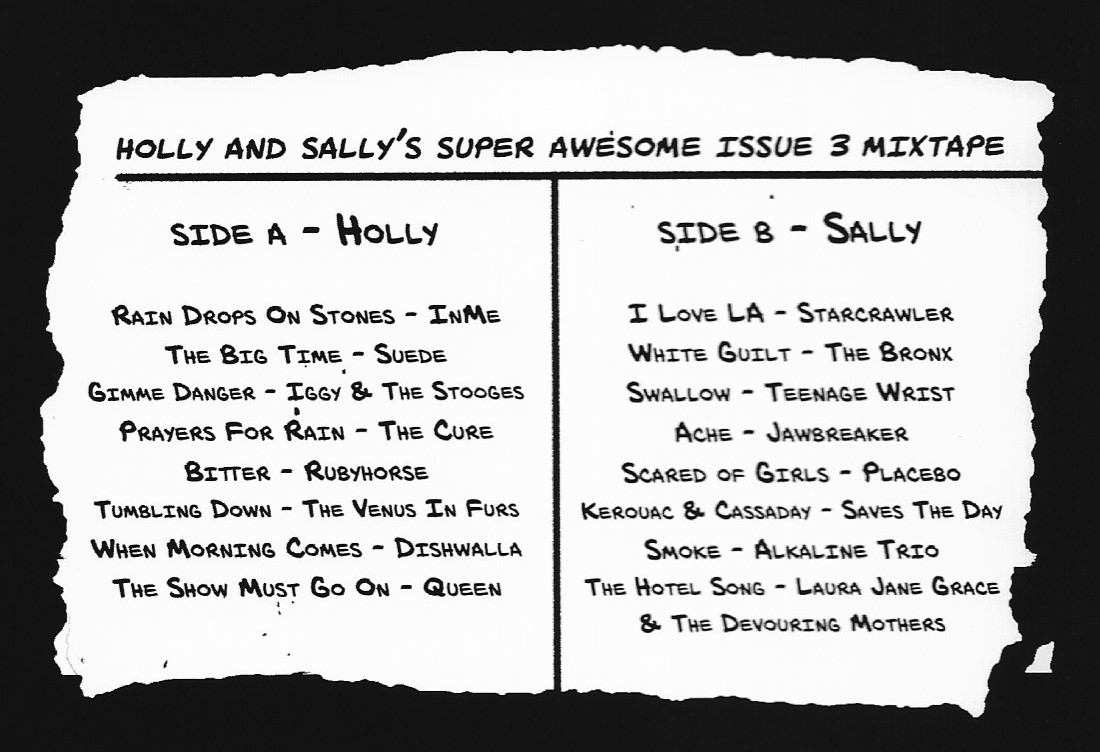
HI: I guess the musical aesthetic has developed over time. But it’s always had an element of glam, an element of metal. It’s not like, acoustic folk rock. It’s definitely hard rock.
CW: It’s good that there isn’t actually music, though, because that way people can drop in a lot of what they actually hear. My personal taste is bands that maybe aren’t just rock and roll, like The Pixies or Throwing Muses. Maybe because they’re weird.
HI: The Pixies are great! That’s a good one. Especially because of the time period.
I’ve heard all sorts of things. One of my friends says he hears Stone Temple Pilots when he reads it! Another friend who’s a Manic Street Preachers fan says early Manics is what he hears.
I think that’s ultimately why I decided not to pursue putting out music with it. Because I wanted everybody to hear their own awesome band in their head. We all have that band that inspires us. I didn’t want to overwrite that for anybody while they were reading the book. I wanted them to come up with what the band sounded like. So even though I wrote all the lyrics, I decided not to release music alongside it. I wanted it to be a more universal experience for people.
CW: That definitely makes sense. It’s very powerful how you can project your own feelings onto music.
HI: And that’s what I wanted! I wanted it to be universal. I wanted people to feel what I felt when I was 20 years old getting so inspired by these bands, and that band is different for everybody. Ecstasy can be whatever you want. Just like the side characters that I put into the story: Julian, James, Nora. Ecstasy affects those characters’ lives in totally different ways—even if they have NO effect, like Jennifer the barista at the coffee shop who has no idea who they are and doesn’t care. I wanted to show how each of them takes away what Ecstasy means to them, and that’s what I wanted readers to do, too.
CW: The side characters are a great touch because they let you breathe a little bit between the story. Like when Julian is going with his sister to the concert, you get a breather from the heavier themes of the story. You get to focus on the experience of what it feels like to be a fan of this band.
HI: That was definitely the goal. You can have this larger-than-life rockstar story, but when you bring it down to the bottom, the people who buy the records are the ones who make it all happen.

CW: I’d like to talk about the characters. Let’s focus a little bit on each one of them, although I don’t think we’ll be able to separate Nicky from Drey, because their stories are so…
HI: … entwined? [laughs]
CW: Okay, spoilers ahead. One thing I really like about the book is that it tackles the queer themes that a lot of music has. Especially in the late 80s and early 90s, there’s a lot of queer subtext, and this book puts it into text.
These two boys are… kind of in love? They’re in love, but they don’t manage it well.
HI: It takes place during a time when you were either gay or you were not gay. Language has evolved, so now you can say “queer” and “queer characters”, and people know what you’re talking about. That’s a huge difference from when I wrote it 20 years ago. It was important for me to tell a story about people who may not know what’s going on. “Well, I’m not really sexually attracted to this gender, but I like this person a lot.” I wanted to explore that in a way that was not so black and white.
CW: The book uses the language of the era to depict people who are struggling with what they feel for each other. Nicky relies emotionally on Drey. Nicky is trying to make sense of his life, and for a long time, that sense is the band and his relationship with Drey. You could even say he depends on Drey.
I like the scenes of both of them in bed, not able to sleep, and they take turns talking about things that are going through their heads, versus the big band scenes of people shouting. It shows the difference between their intimate and public lives.
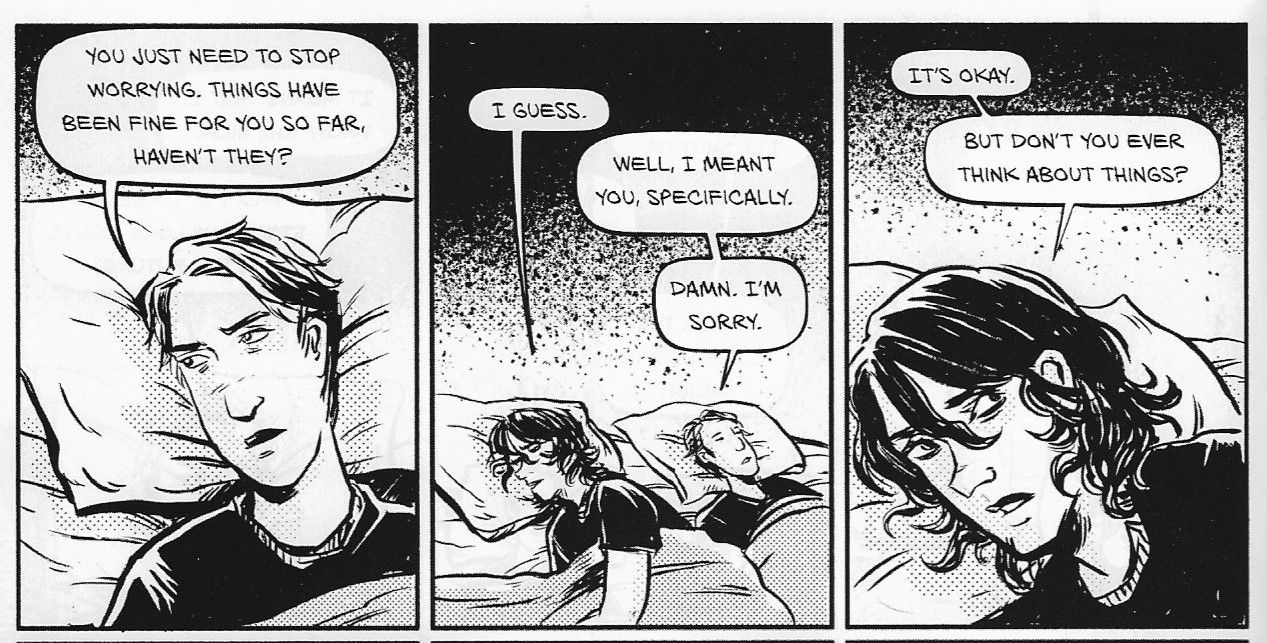
CW: So, what was the inspiration for this relationship? I was happy with how the relationship developed—to see it explicitly acknowledged, because I ended the first issue thinking, “I want this to be acknowledged.” And then when the second issue finished, I was like, “This is GREAT!” It takes its time to arrive there, but it’s building the whole time. Where did you get that from?
HI: It came from a lot of places. I guess I wanted to explore an intense relationship that wasn’t about sex. When people tell stories about a relationship, it almost always has a sexual element. I think there’s a lot more to explore in really intense relationships and friendships.
Plus, everybody grows up thinking they have to be heterosexual and fall in love with the opposite sex. So for Nicky, it’s difficult to acknowledge that the person he falls in love with is not a woman. That kind of blows his mind. I think that should be… I don’t want to say normalized, because normal is boring, but it should be explored more.
I also wanted to come up with a story where you could see both sides of how the relationship was developing. I didn’t want any “bad guys” in the scenario. I didn’t want people to think, “Oh, this guy is terrible to Nicky, blah blah.” In real relationships, things fall apart not because either person is evil, but because there are personality clashes that happen. Nicky’s obsessed with the band and fulfilling his dream, and he gets so caught up in that he forgets who he really is and what really matters around him. Drey is the one who grounds him, and he’s starts feeling uncomfortable when Nicky starts doing all the rockstar stuff—sleeping with groupies, taking ecstasy at a show. He’s like, “This isn’t you.” But Nicky doesn’t see that.
And finally… I was having my own gender identity problem at the time. I called myself an alien, and I still do, sort of in jest. The popular term is nonbinary, but when I wrote the book, that didn’t exist! It wasn’t an option. You either had to be what you were born as or have a “sex change”, as it was called back then. This was only 20 years ago! It’s changed so much.
Now I can be my genderless self and be okay with that, but when I wrote the book, that wasn’t a thing. A lot of the confusion about gender was from my own experience. Being like, “Why do I have nothing in common with women? Why do I feel like they’re not like me?” It’s really hard to exist in society like that. When you’re a teenager, and even in college, you want to be like everybody else. You want to fit in. You don’t want to feel like there’s something inherently different or wrong with you. Obviously that develops as you get older and you become a little more accepting of your weirdness. But when you’re young, it’s really hard to deal with.
CW: I definitely feel some of that in Nicky. Some of the stuff that comes up in the book, like the eyeliner thing—that comes up at least three times. People make so many comments about his eyeliner. If you were doing makeup Mötley Crüe style, nobody would comment on it. It seemed like something deeper. I definitely read Nicky as some kind of nonbinary.
HI: That makes total sense.
CW: Well, I have confirmation from the author now! [laughs]
HI: I obviously wanted to create a character that was not your typical hetero dudebro, and gender play comes into that. Glam rock was one of the only acceptable places, in the late 80s and early 90s, for dudes to wear eyeliner. So even if Nicky wanted to wear it in his private life, it wasn’t something that was embraced. The rockstar thing is almost an excuse. “Oh, I’m a rockstar now, I can wear makeup.”
The eyeliner itself sort of became a representation of his rockstar personality. When he puts on the eyeliner, all of a sudden he’s a larger-than-life persona, at least in his head. When he washes it off, he’s just Nicky again. It’s the same with the sunglasses, actually. I don’t know if you noticed that, but he takes to wearing sunglasses later in their career just… all the time. Indoors, outdoors. He tends to take the sunglasses off when he feels more down to earth and connected to people. That was another symbolic thing that arose.
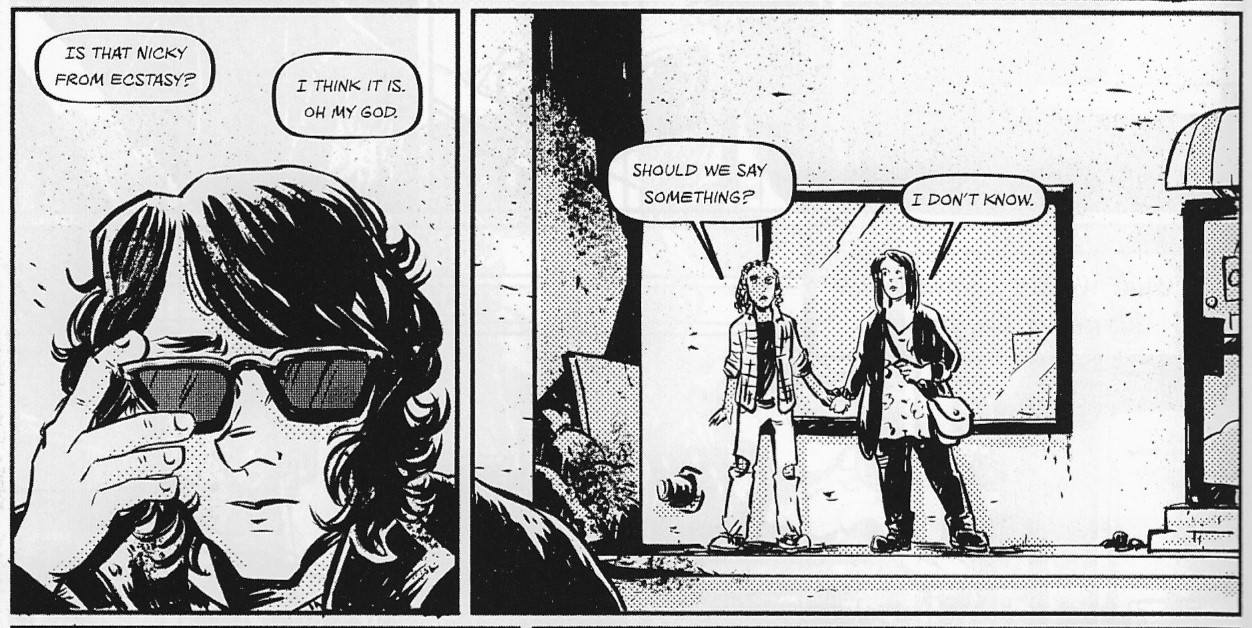
HI: I didn’t actually go into the book planning that kind of symbolism, because if you go into a story with big symbols in your head, it ends up being really obnoxious and allegorical, hitting you on the head over and over like The Scarlet Letter or something. I planned the story and just waited for the symbols to develop. They ended up being things like eyeliner and sunglasses.
CW: Him having to explain the eyeliner over and over again made me think he really wanted to wear eyeliner, but needed an excuse. That’s really relatable.
HI: Well, thank you. I’ve been with these characters for 20 years, so refining them has been one of the great joys in my life. Because I didn’t actually start turning the novel into a script until 2015. And it was a LOT more work than I thought. I was naively like, “Adapting it to comics will be easy!” Nope. Not easy. I found myself having to cut all these lines of prose that I was totally in love with because comics are a different medium. You don’t need as many words.
Another interesting tidbit is that in the original novel, Alex is a boy.
CW: Oh! I like that change.
HI: When writing the adaptation, I was thinking, do I really want to write a story about a band full of white men? It’s something that didn’t occur to me when I was in college. It occurred to me while I was adapting it. So I thought, maybe I should flip the switch a little bit. Which ended up working a lot better than the character of Alex in the book.
CW: Alex works in the comic.
HI: Right? In the book, Alex is timid and doesn’t speak up for himself. He needs to learn that he has a voice, and that he has influence and a presence. So when I turned Alex into a girl, it became more about standing up for yourself when you’re the only girl in the band. You have to have a really strong personality to be onstage with a bunch of dudes. That’s why… spoiler, I guess, but that’s why the climax of her arc is getting up in front of people by herself and being like hey, I am somebody. I am not just the background!
CW: Since you brought her up, let’s talk more about Alex. She doesn’t get the same amount of development that Nicky and Drey get, but you can feel that she has a lot of ideas and things she wants to express, but is constantly being put down and put aside. That comes up really beautifully in the scene with the letter from the little girl who also wants to play music. Alex is so proud of that. Like she saw herself in that girl. Which goes well with her arc.
HI: One of the things I loved about working with Sally [Cantirino] is that Sally has a cat, and I love that she gave Alex a cat. I have a dog. I’m a dog person. But Alex strikes me as a cat person. I’m not sure why… maybe it’s more of the strong silent type. When Nicky doesn’t have Drey and he’s talking about Drey, he calls Alex. She knows what’s up. She’s the one who’s like “Um, duh.” Nicky’s all, “Why is there so much emotional tension between us?” Alex is like, “How are you not getting this?”
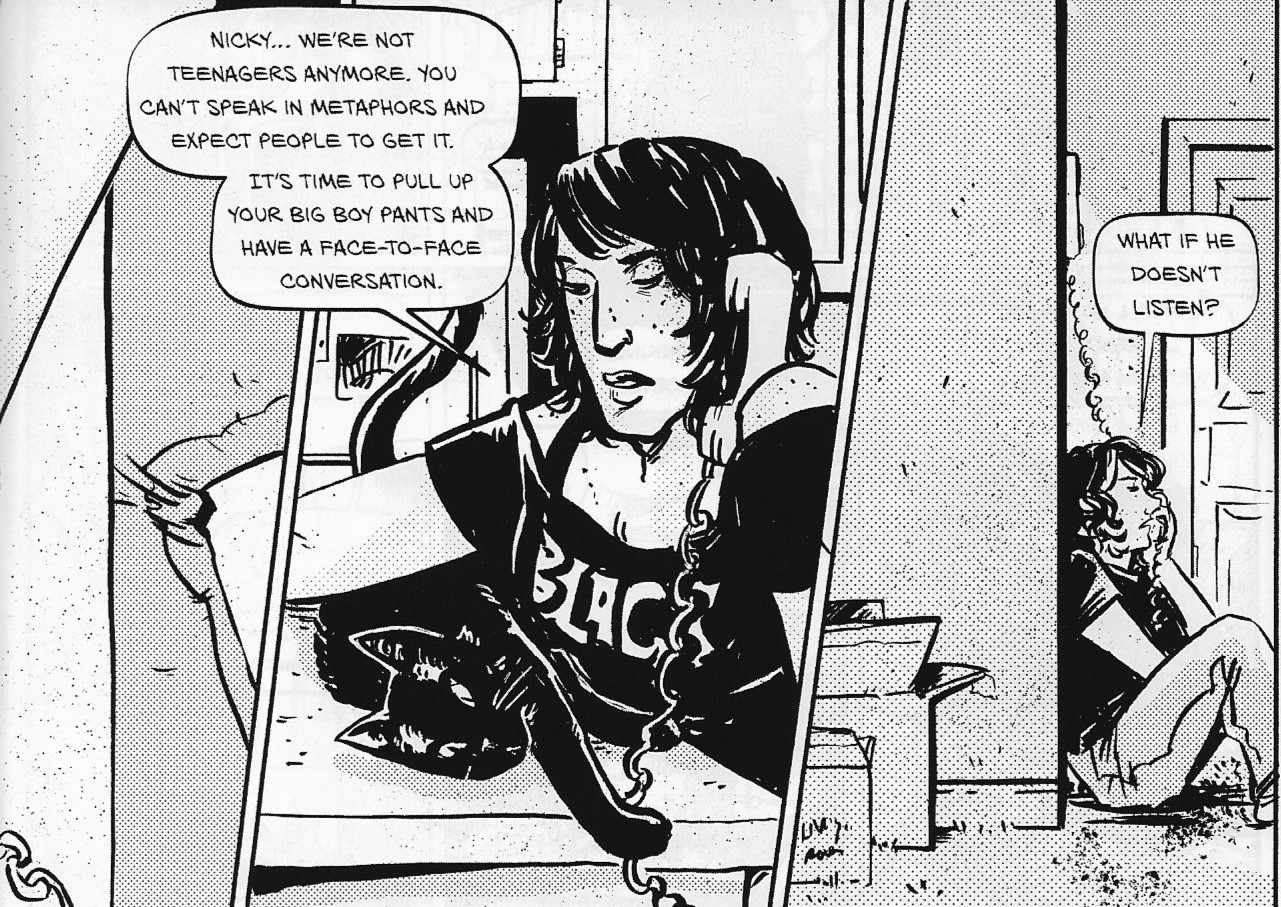
CW: She’s the most well-rounded and down-to-earth figure in the band.
HI: She’s the one who actually has her shit together, so to speak. Unlike everybody else. They’re all a fucking mess. [laughs]
CW: Let’s talk about Charlie. I also read Charlie as queer, probably. When they’re ordering food, he comes across as a happy person, extroverted, and all that. But as the story develops, you realize that he kind of has a fear of being alone with his thoughts. Later in his arc he develops drug addiction.
He really surprised me. I thought he was a jerk in the first issue. There was a bestiality joke, and I was like, “I can’t stand this dude.”[laughs] But then I ended up understanding him morally a lot better.
HI: The hard thing with Charlie was… I mean, I’m an introvert. But we all know a Charlie. That person who can party every day and drink all the time and be like “Yeah, let’s party some more!” It’s like, HOW? So it was a challenge writing him. I wanted to make him fun enough that all the crazy stuff he does doesn’t feel asshole-ish. He’s like hey, let’s take ecstasy at an Ecstasy show! It’s cheesy and it’s dumb, but it’s also sort of charming, which overshadows the fact that it’s a really irresponsible thing to do.

HI: That’s who Charlie is to me. He’s crazy, he’s always dying his hair different colors, he’s loud, he’s out there, he tells dirty jokes. He sleeps with… everything. [laughs] But he gets the band opportunities that they wouldn’t have otherwise had. He’s the one who says they should put out an ad for a drummer. And Nicky’s like, noooo, it has to be organic! But Charlie puts an ad in the paper without telling them, and Nicky’s all pissed off. But that’s how they find Alex! So Nicky comes to understand that Charlie’s crazy ideas, even though some of them are dangerous, give them opportunities they may not have had otherwise.
Obviously, Charlie takes it too far. That’s one of the dangers of that kind of personality—the one who indulges in everything. That’s his downfall. He indulges too much, he wants to try everything, and it doesn’t end well for him. Once you’re on drugs all the time, as you said, you get scared to be alone with your own thoughts.
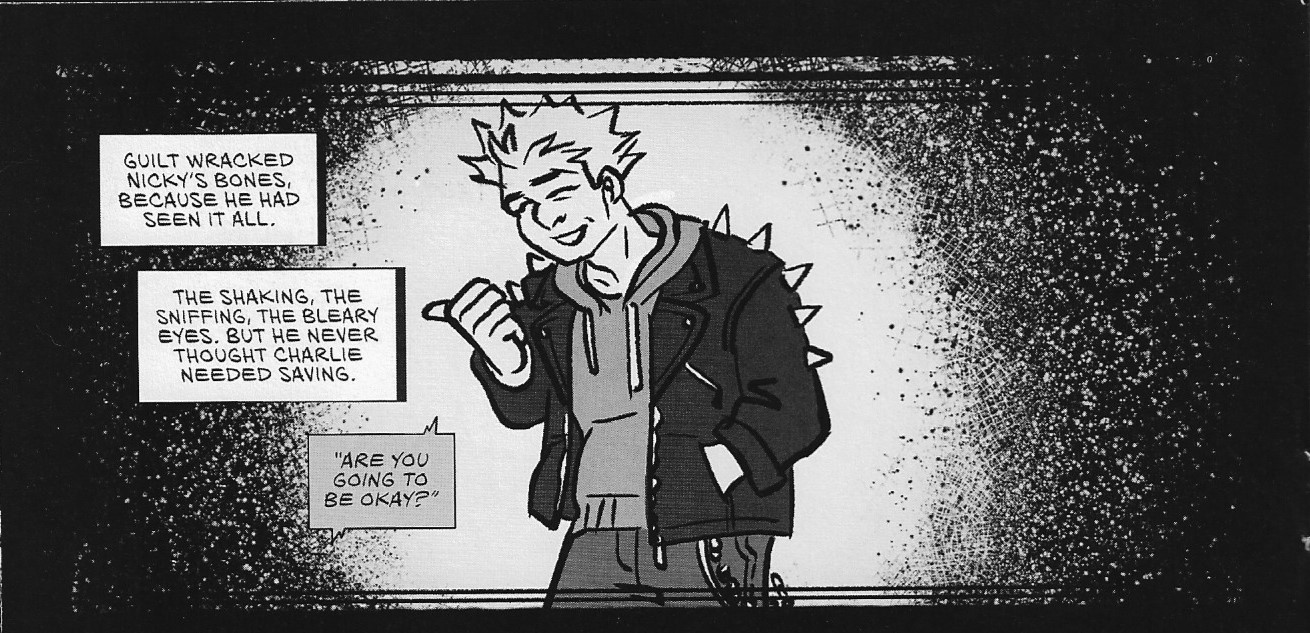
HI: I think it’s really funny that you hated him in the first issue, because I was trying really hard to create a likeable extroverted character. Somebody who is a nut and obnoxious but also so likeable you can’t help but want to hang out with him. Obviously I failed in the first issue [laughs], but I’m glad you warmed up to him later on.
CW: It’s a part of addiction that is represented less. How it can be seen as fun from the outside. People think he’s having so much fun, but to some extent, he’s not.
HI: So many stories of addiction are about the depressed guy shooting up heroin who’s like, “Ugh, my life is a lie.” It’s easy to forget that people get into it because it’s FUN. Or it seems fun, at first. There’s a part in one of my favorite movies, Trainspotting, when the main character talks about how everyone thinks they’re stupid for doing heroin, but they forget how amazing it feels: “Otherwise we wouldn’t do it! After all, we’re not fucking stupid. Or we’re not THAT fucking stupid.”
At the outset, Charlie was very inspired by Hideto “hide” Matsumoto, the lead guitarist for X Japan. He was a crazy punk rocker with bright pink hair who was very eccentric and a party boy, and everyone assumed he was having so much fun. But then after the band broke up, he killed himself.
The party animal who always seems happy might be hiding something under all of that.
CW: Because you say the novel and the comic ended up so different, I’m curious about the format. Last Song is not only a comic. It includes interviews and parts of Drey’s diary entries. Are Drey’s diary entries are part of the novel?
HI: Yes. All of that stuff is part of the novel. The interviews, the press releases, Drey’s diary entries… all of it was in the novel because it was how I wanted to show all sides of the story instead of just one point of view. I wanted to show everybody’s point of view. And sometimes that point of view is from a random journalist with no stake in this band who’s just interviewing them for a paycheck.
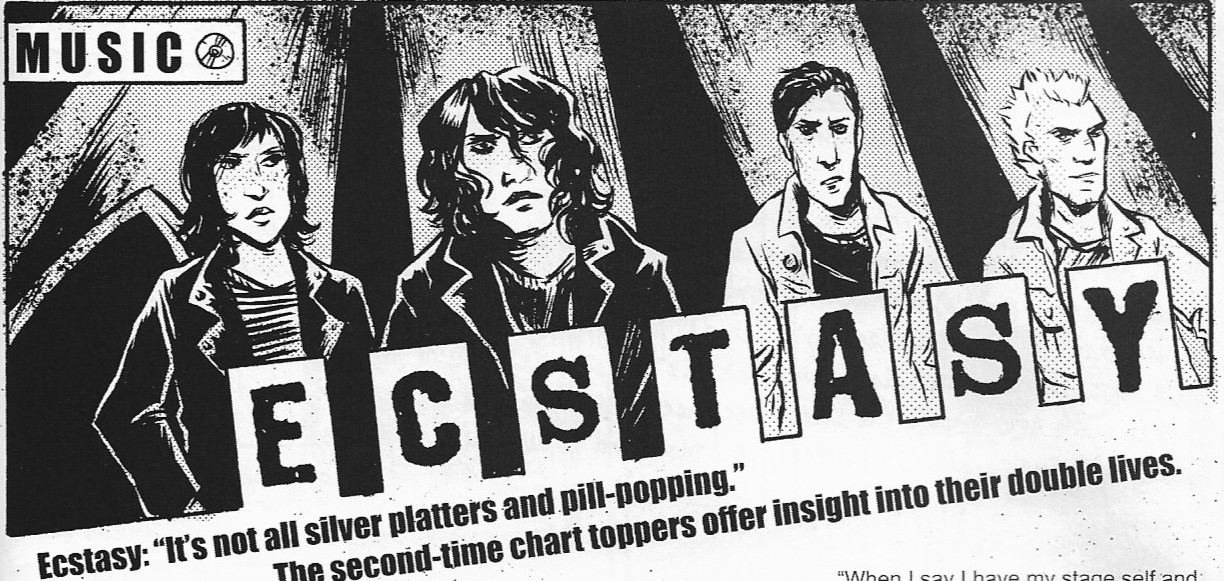
HI: I’ve always been a really big fan of multimedia projects and comics that have bonus material. Just look at WATCHMEN, with the bonus back matter sections in between the comic parts. Another one of my favorite comics is NOWHERE MEN. It’s about a bunch of scientists who are sort of like the Beatles, and in between the actual comic story are fake interviews and fake advertising, and I love that because it’s such a big part of the world-building. It makes you believe it really exists!
CW: The diary entries definitely help you understand Drey better—what he’s dealing with, and his insecurities with relationships. Because a lot of the story is from Nicky’s point of view.
HI: That was also the same as in the book. Nicky’s point of view was the main thing, but everybody gets a their point of view. I wanted to experiment. I wanted to play around. I wanted to show everybody’s perspective. Singular perspectives are really boring.
Like Charlie’s pages in the later issues that take over for Drey’s diary entries. They work really well as splash pages, too! In the novel it’s just text, obviously, but the art splash page behind it almost makes it more powerful.
CW: The story is really sad, and really difficult. Spoiler: It’s not a happy ending, but it kind of has an uplifting tone. Nicky is struggling with whether he wants to be around—if he wants to live, or if he doesn’t want to live. Whether he’s going to go the way of his father. But he breaks all his old stuff, instead. It’s very dramatic, and you don’t know how Nicky is going to end up. You’re worried about him.
But at the end, he hears one of his songs in a café and sings along, and the barista goes, “You must be a fan!” Nicky remembers that he still has something he’s proud of. And in that moment, it seems like enough.
HI: I’m glad the ending worked for you. Because that’s exactly it: By the end of the book, he’s so caught up in his own personal drama and depression and what his life means he forgets there’s a world outside of that. A world where Ecstasy affected other people. It’s not just something that happened to him. It happened to everybody.
Getting that outside perspective is what helps him. He’s like oh, right, this is something that’s still out in the world. It’s not just something that happened in my head.

HI: I was a little nervous because I didn’t resolve the relationship between Nicky and Drey. But to me, the major conflict was always Nicky versus himself. He starts by trying to understand why his father would kill himself, and he’s all, “I don’t get it, I don’t get it.” By the end of Issue 4, he gets it. But then he decides not to do it. It felt right to end it there, as opposed to having this big cheesy reunion thing where Drey is like “I’m gonna divorce my wife and marry you instead!” Eh. [laughs] You can write fanfiction about that if you want. To me, it ended where it needed to. And I’m glad you liked it.
CW: Of course it’s good to have happy endings for queer people, but in this, I understood why it might not be the best relationship for both of them. Maybe after all this, Nicky experiments more with his gender and sexuality. Maybe he comes out later in life. But it’s not really important.
HI: Because that IS the ending. He lives. He’s alive. He’s going to keep living. Whatever that means—whether it means reconciling with Drey, whatever it means—the fact that you don’t know is what makes it uplifting. He has a future! He’s going to do whatever he wants!
There’s so much romanticizing of downward spirals and people who dramatically die. And I’m not saying there’s anything wrong with that kind of story. There are a lot of stories like that that I really enjoy. But in this particular story, I found it important to emphasize that LIVING is the inspirational thing.
So often, the guy who dies becomes a legend, but what about the people who get old? Do they get to be legends, or do they just get old? If you’re alive, you’re getting old. That’s just the way it works. You don’t get both. You don’t get to be young forever and keep being alive. Nicky has to make that decision.
I get annoyed that the “legendary” rockstars are always the ones who died. Celebrated musicians, you know? “Oh my god, he killed himself when he was 25, and now he’s a legend!” Okay, but what about the people who don’t die? What about the people who keep going and decide not to succumb to that?
Think about a band like Nirvana. If Kurt Cobain were still around now, a balding old fart hanging out with his daughter, would we still be going, “Oh my god, Nirvana are soooo legendary”? Maybe not, because people have a fear of seeing their idols get old. But I love it when rockstars and musicians die of old age at like, 92, after having a great life. It’s not as dramatic as going out at the top, but it’s better!
It makes me so angry when people put a dead person on a pedestal and then judge everything a living person does as if it’s always the wrong thing. “The dead person wouldn’t have done this!” “He’d be rolling over in his grave!” Like no, this person is ALIVE, so they’re going to make mistakes and they’re going to do bad shit and they’re going to do stuff that you don’t agree with. Because that’s what being alive means.
CW: It wouldn’t have hit as hard if it ended with Nicky and Drey being reunited, because it may have felt like he was living for love, which wouldn’t sit right. Instead, he decides to live because of personal motivations.
HI: And having a partner isn’t the be-all, end-all of existence! A happy ending doesn’t have to consist of “finding your true love”. Maybe it doesn’t! Maybe you just want to live because you want to do more shit! That’s cool, too!
CW: This comic took four years to come out, didn’t it?
HI: Yeah. Part of that is my fault, because as I said before, I thought, “The story is written, I’ll just crank out 60-page issues in no time!” That’s not the way it works. There were a lot of reasons for the delays, but one of them was my overconfidence in being able to adapt it.
I’m just glad we got here eventually. People may not even know it kept going. People who read comics have very short attention spans. They’ll forget about a book if it misses a month, let alone a whole year. I’m just glad it got finished. Because some comics don’t.
It was hard to have Sally not be able to finish it, because she brought so much to the characters. She’s so good. But she’s drawing comics for Peter Milligan now, so she’s doing fine. [laughs] She doesn’t need my help!
Finding Natalie [Jackson, artist for Issue 4] was a total blessing. She just got it, immediately. I didn’t even have to refine her character designs! She sent me a character page of Nicky and Drey and some other stuff and I was like, well, this is fucking perfect.
It was so serendipitous to find her and finish the book. Natalie killed the last scene, too, with how she made it look like Nicky was in motion. She warped the images to make it look like Nicky was moving. Great stuff.
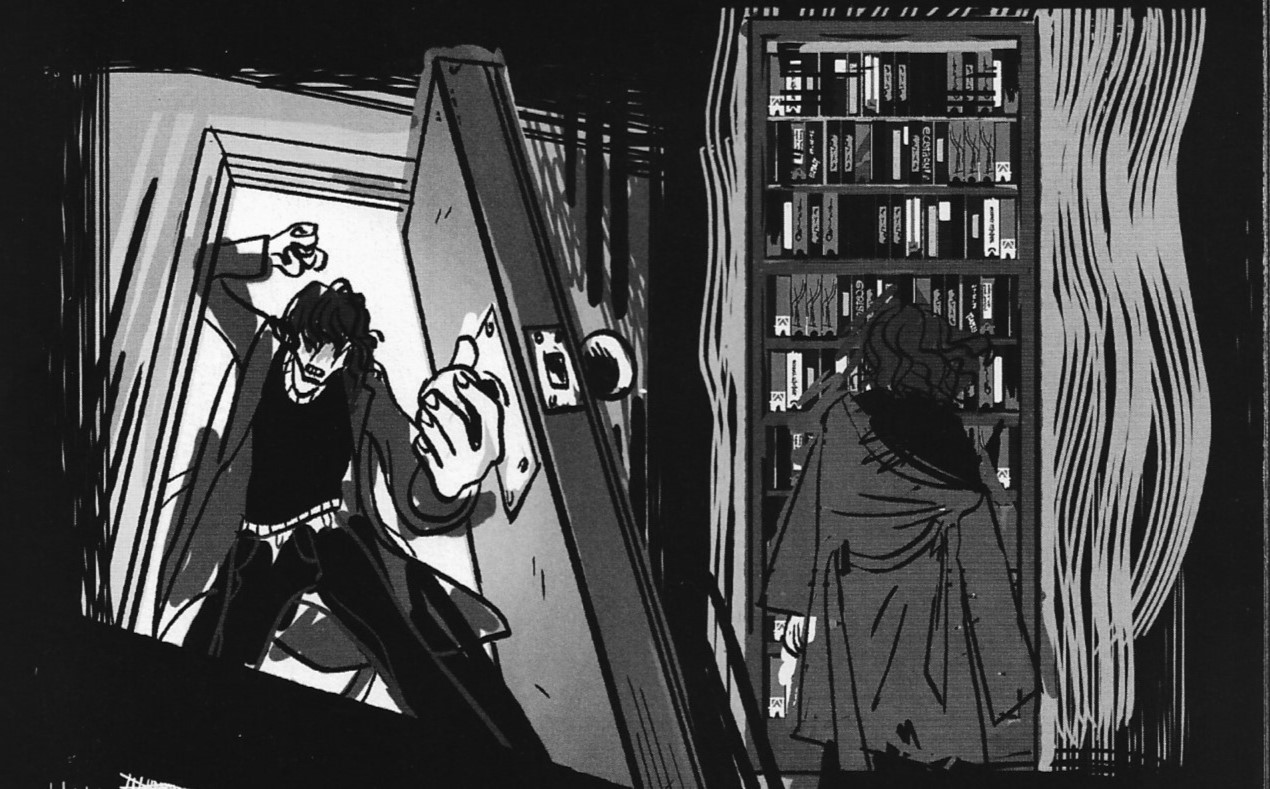
CW: The art style in the last issue is very different, but it fits, because the issue gets very harsh, and Natalie’s art is more beautiful while Sally’s art style is very punk. But the last issue could beautiful because the end is beautiful.
HI: That’s a nice way to think of it! Sally’s very punk, yeah. I love her. I was afraid it wasn’t going to work without her. But thanks to Natalie and Matt Pizzolo and Black Mask, we got it done. We crossed the finish line. I’m very grateful.
Last Song is available for purchase at Black Mask, Amazon, Barnes & Noble, and elsewhere.
 HOLLY INTERLANDI